Hands-on

Companion notebooks

19 notebooks from TSGLAB/Interpretability_Survey_Safety, 13 run on a CPU.

Core hypotheses

Prerequisites: None. This is the foundation for everything else, so start here.

notebooks/01_core_hypotheses/01_linear_representation_hypothesis.ipynb

Features correspond to directions ϕ∈Rd\phi \in \mathbb{R}^d in activation space. The projection ϕ⊤hl(x)\phi^\top h_l(x) approximately measures the intensity of that feature for input xx, and features combine additively: hl(x)≈∑iαiϕih_l(x) \approx \sum_i \alpha_i \phi_i. This implies features can be detected via linear probes and added or removed via vect…
Survey section
§5.1 The Linear Representation Hypothesis
Models
gpt2
Dependencies
numpy, sklearn, torch, transformers
In the explorer
Probing Classifiers The Linear Representation Hypothesis

notebooks/01_core_hypotheses/02_superposition_hypothesis.ipynb

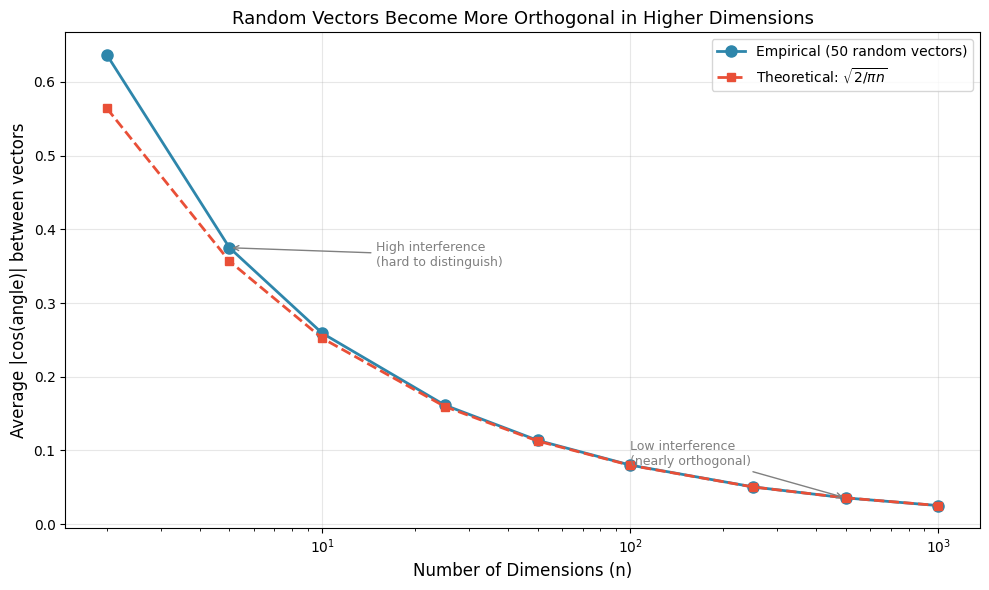
Model hidden states encode more features than they have dimensions. If there are kk features and dd dimensions with k>>dk >> d, models tend to reduce interference between features by representing them as nearly-orthogonal directions.

Survey section
§5.2 The Superposition Hypothesis
Models
None (toy or synthetic data)
Dependencies
matplotlib, numpy, torch
In the explorer
The Superposition Hypothesis
First saved output plot from the notebook “Superposition Hypothesis”

The Privileged Access Hypothesis

Large GPU · 8B params

notebooks/01_core_hypotheses/03_privileged_access_hypothesis.ipynb

A model used to interpret itself can, under appropriate elicitation, access internal variables and intermediate computations that are not reliably recoverable from external behavioral analysis alone, providing a comparative advantage as an interpreter of its own behavior.

Survey section
§5.3 The Privileged Access Hypothesis
Models
meta-llama/Llama-3.1-8Bgated: meta-llama/Llama-3.1-8B
Dependencies
dotenv, huggingface_hub, model, numpy, torch, transformers, yaml
Needs
Hugging Face token
In the explorer
The Privileged Access Hypothesis

Colab note: it needs about 32 GB of GPU memory (stated in the notebook), more than a free Colab GPU offers.

Feature extraction

Prerequisites: Requires understanding of superposition (01_02).

notebooks/02_feature_extraction/01_sparse_autoencoders_basics.ipynb

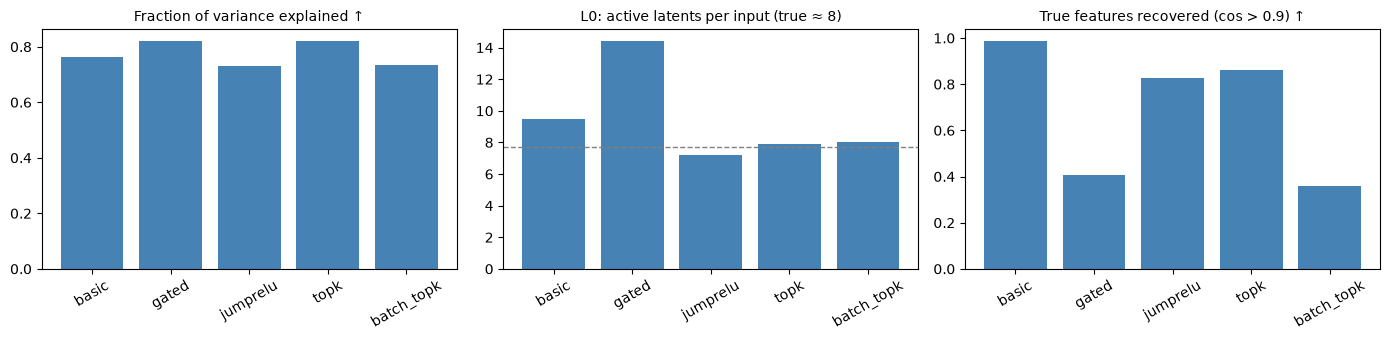
Feature extraction identifies distributed features across neurons that correspond to coherent semantic units. Sparse autoencoders (SAEs) address polysemanticity (neurons encoding multiple features) by decomposing activations into sparse, interpretable features using an overcomplete basis (m>>dm >> d).

Survey section
§6.2 Sparse Autoencoders
Models
None (toy or synthetic data)
Dependencies
matplotlib, numpy, torch, tqdm
In the explorer
Sparse Autoencoders (SAEs), Gated SAEs, JumpReLU SAEs, Top-k SAEs, Batch Top-k SAEs
First saved output plot from the notebook “Sparse Autoencoders: Variants and Implementations”

notebooks/02_feature_extraction/02_transcoders.ipynb

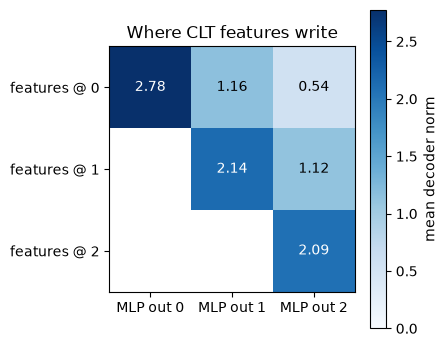
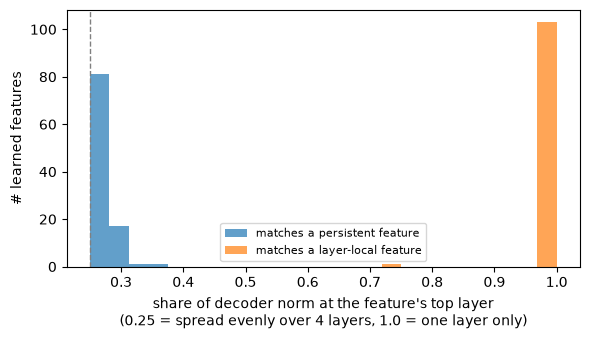
Standard Sparse Autoencoders (SAEs) excel at decomposing representations in the residual stream, where features propagate linearly. However, they struggle with nonlinear transformations like MLP layers and attention mechanisms.

Survey section
§6.6.1 Transcoders: Bridging the Nonlinearities
Models
None (toy or synthetic data)
Dependencies
matplotlib, numpy, torch, tqdm
In the explorer
Transcoders
First saved output plot from the notebook “Transcoders: Bridging Nonlinear Layers”

Circuits

Prerequisites: Builds on feature extraction concepts.

Circuit Discovery

CPU · 124M params

notebooks/03_circuits/01_circuit_discovery.ipynb

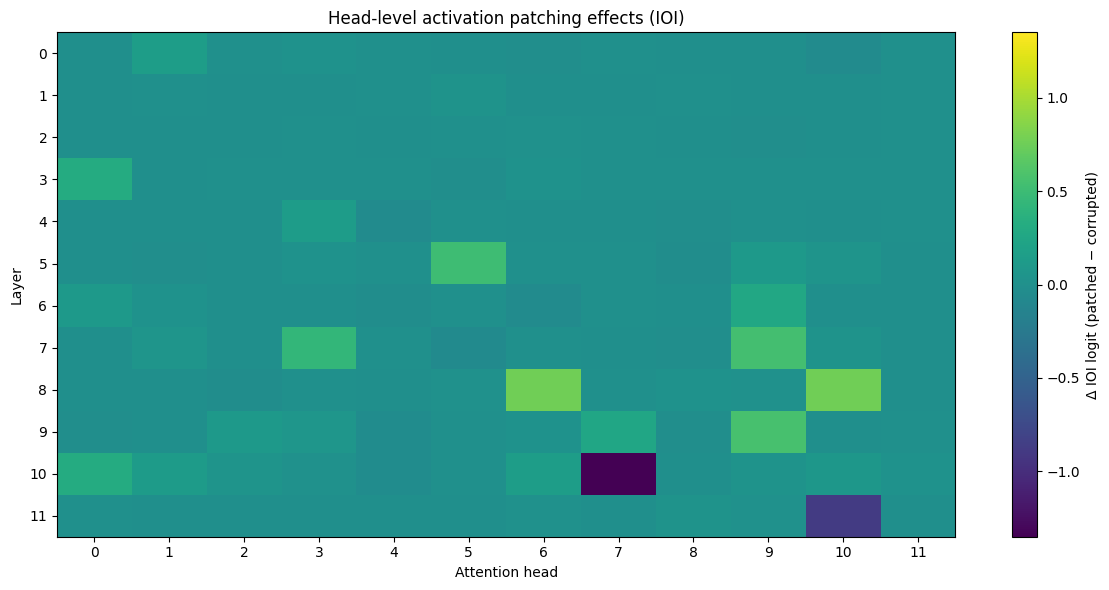
Circuits are minimal subnetworks that implement specific behaviors. Circuit discovery aims to identify which components (attention heads, MLP neurons, features) are responsible for a particular computation. This is a minimal notebook as this field is large.

Survey section
§7.1 Circuit Discovery Methods
Learning outcomes
Covers:
  • Activation Patching: Replace activations to measure importance of nodes
  • Attribution Patching: Efficient gradient-based approximation for edges
Models
gpt2
Dependencies
matplotlib, numpy, torch, tqdm, transformer_lens
In the explorer
Activation Patching
First saved output plot from the notebook “Circuit Discovery”

Intermediate computation

Prerequisites: Largely independent; can be done in parallel.

notebooks/04_intermediate_computation/01_logit_lens.ipynb

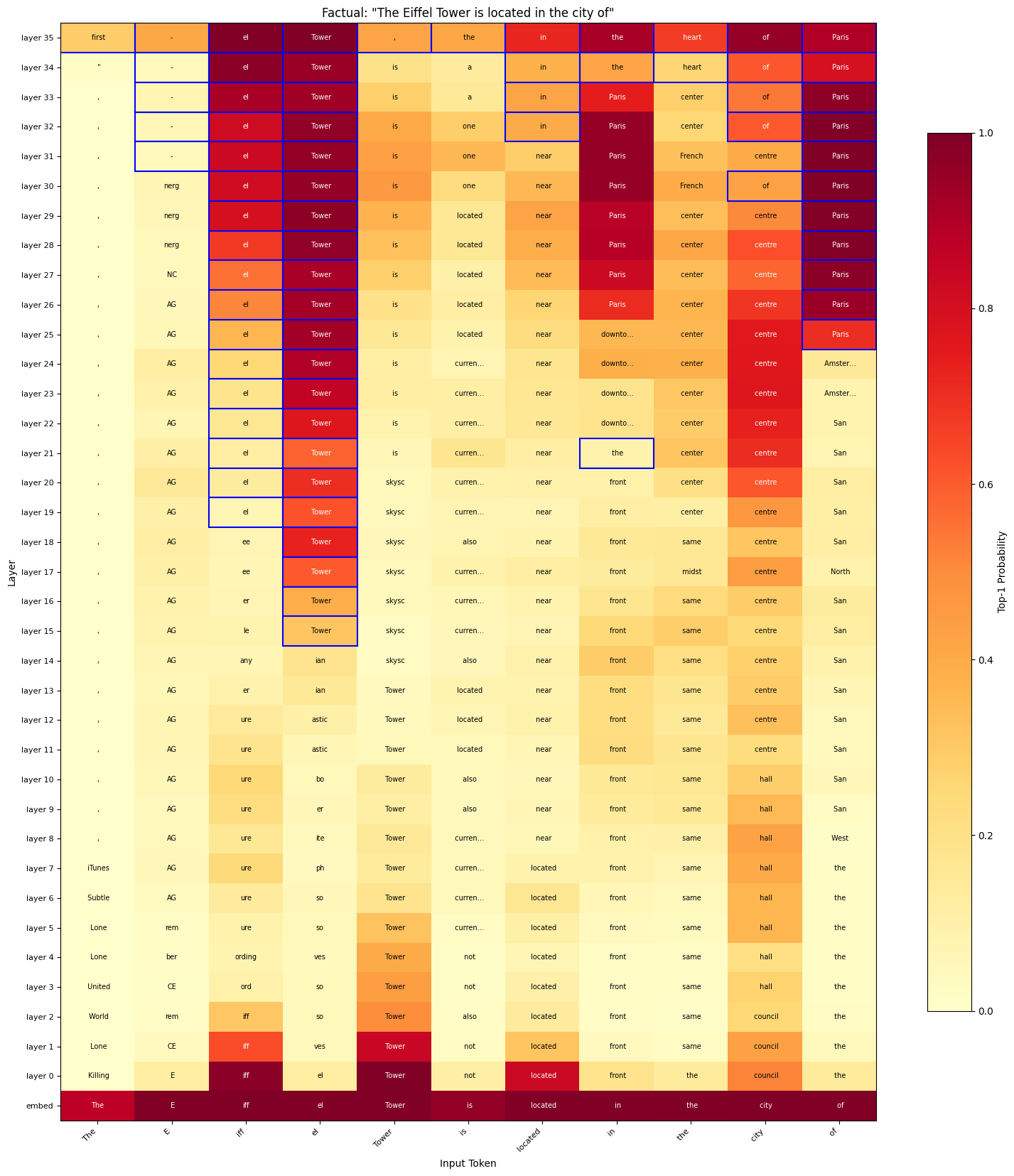
The Logit Lens (nostalgebraist, 2020) reveals what a language model "believes" at each stage of processing. GPT's final prediction comes from projecting the last layer's hidden state into vocabulary space. The logit lens applies that same projection to every intermediate layer:

Survey section
§8.1 Logit Lens: Tracing Predictions Through Depth
Learning outcomes
  • Understand *why* the logit lens works (residual stream architecture)
  • Implement it from scratch with HuggingFace Transformers
  • Visualize and interpret layer-wise predictions
  • Analyze convergence with ranks and KL divergence
  • Know the limitations and motivation for the Tuned Lens
Models
openai-community/gpt2, openai-community/gpt2-large
Dependencies
matplotlib, numpy, sae_lens, torch, transformers
In the explorer
Logit Lens
First saved output plot from the notebook “Logit Lens: Tracing Predictions Through Depth”

notebooks/04_intermediate_computation/02_tuned_lens.ipynb

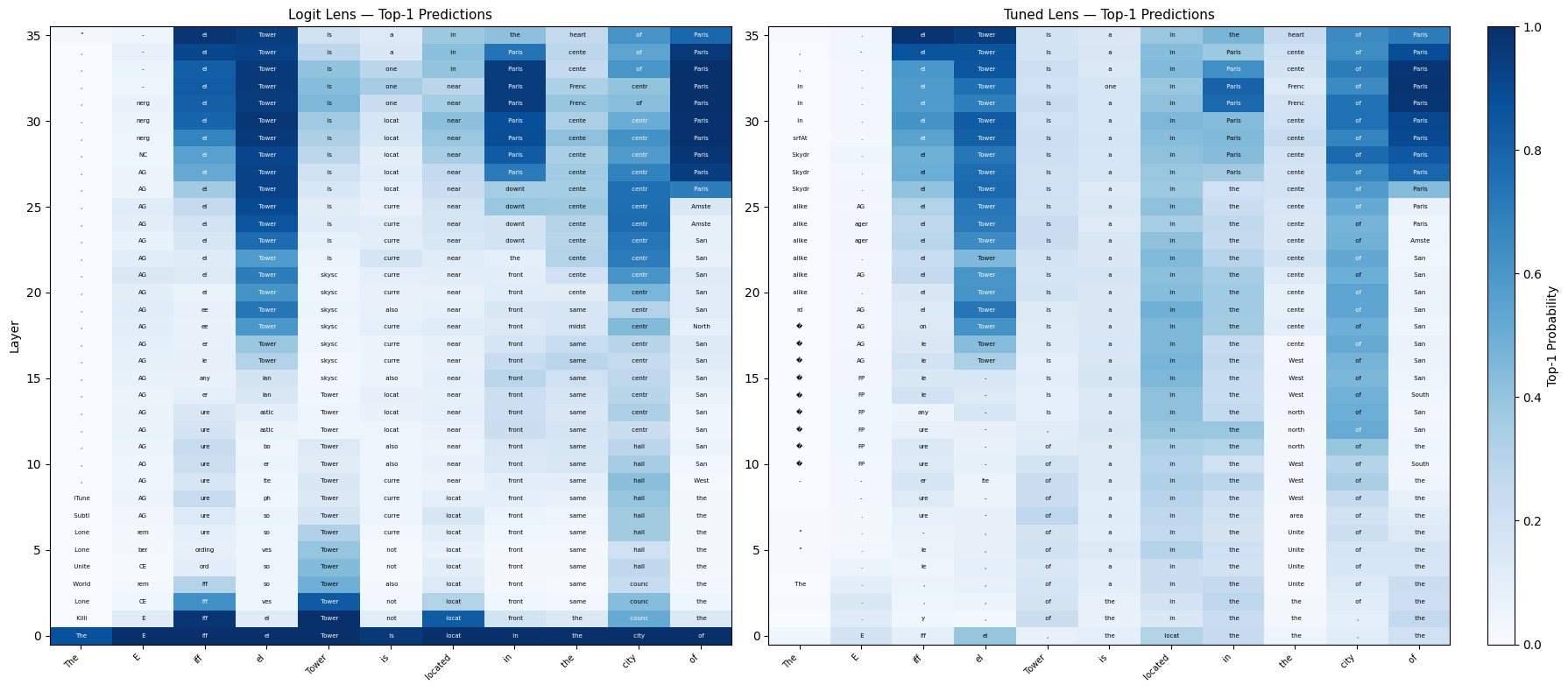
The logit lens projects intermediate hidden states through the unembedding matrix to see what a model "believes" at each layer. However, it systematically underperforms because intermediate layers may encode information in a rotated or shifted basis that doesn't align with the unembedding matrix.

Survey section
§8.2 Tuned Lens: Learning Per-Layer Transforms
Learning outcomes
  • Understand why learned transforms help (representation drift)
  • Train a tuned lens from scratch (pedagogical)
  • Load and use pre-trained tuned lens weights
  • Compare logit lens vs tuned lens predictions
  • Analyze what the learned transforms reveal
Models
openai-community/gpt2-large
Dependencies
datasets, matplotlib, numpy, torch, tqdm, transformers, tuned_lens
In the explorer
Tuned Lens
First saved output plot from the notebook “Tuned Lens: Learning Per-Layer Transforms”

notebooks/04_intermediate_computation/04_patchscopes.ipynb

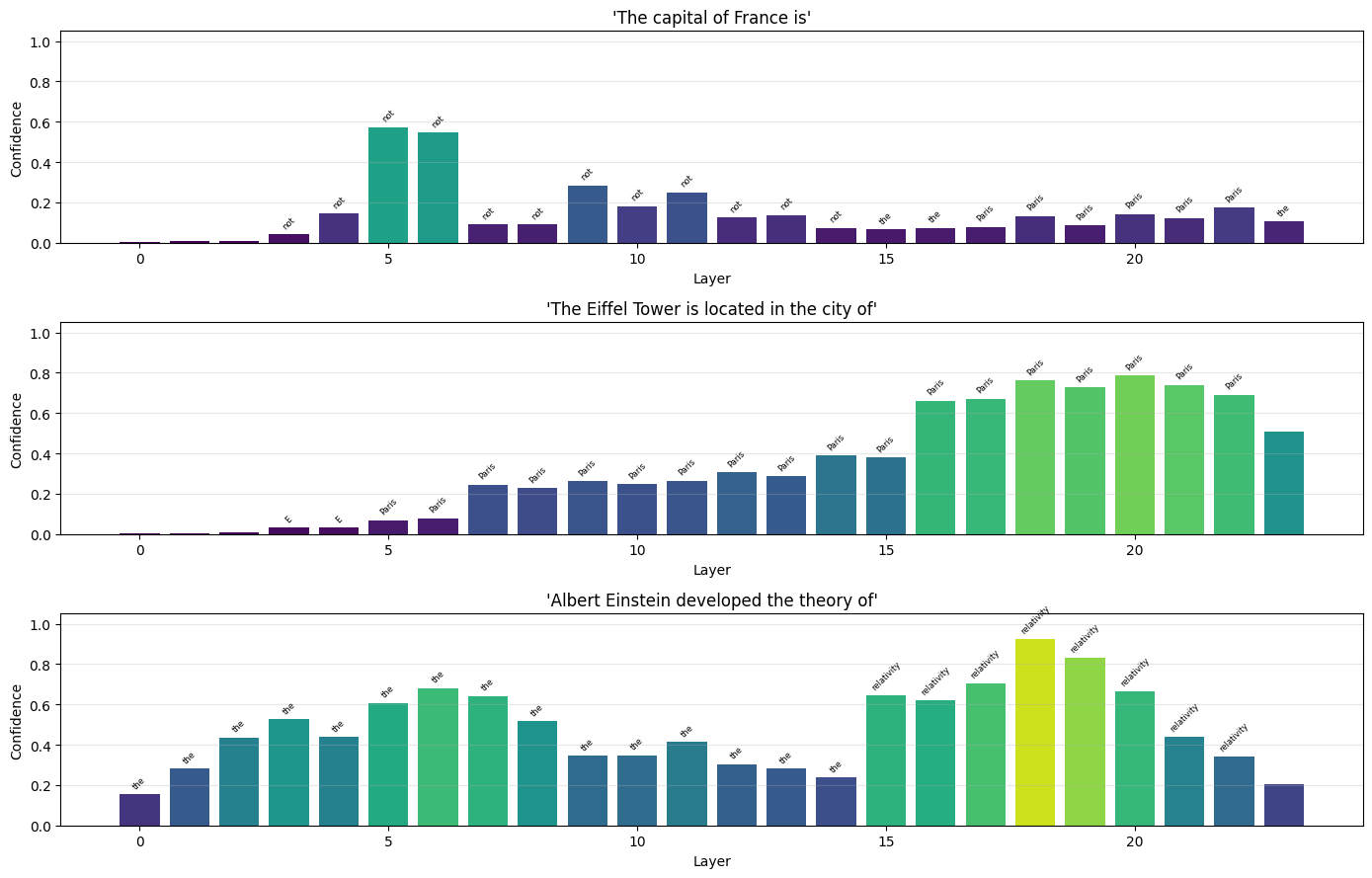
Patchscopes use the language model itself to decode and explain its intermediate representations. Instead of training external probes, we patch hidden states into prompts that ask the model to describe what it represents.

Survey section
§8.4 Patchscopes: Leveraging the Language Model Itself to Explain Intermediate Representations
Learning outcomes
  • Understand the patchscopes framework and its formal configuration
  • Implement patchscopes using forward hooks in PyTorch
  • Decode token identity at each layer (logit lens as patchscope)
  • Visualize how predictions evolve across layers
  • Evaluate reliability against known ground truth via source-target layer sweeps
Models
gpt2-medium
Dependencies
matplotlib, numpy, torch, transformers
In the explorer
Patchscopes
First saved output plot from the notebook “Patchscopes: Using the Model to Explain Itself”

notebooks/04_intermediate_computation/05_probing_classifiers.ipynb

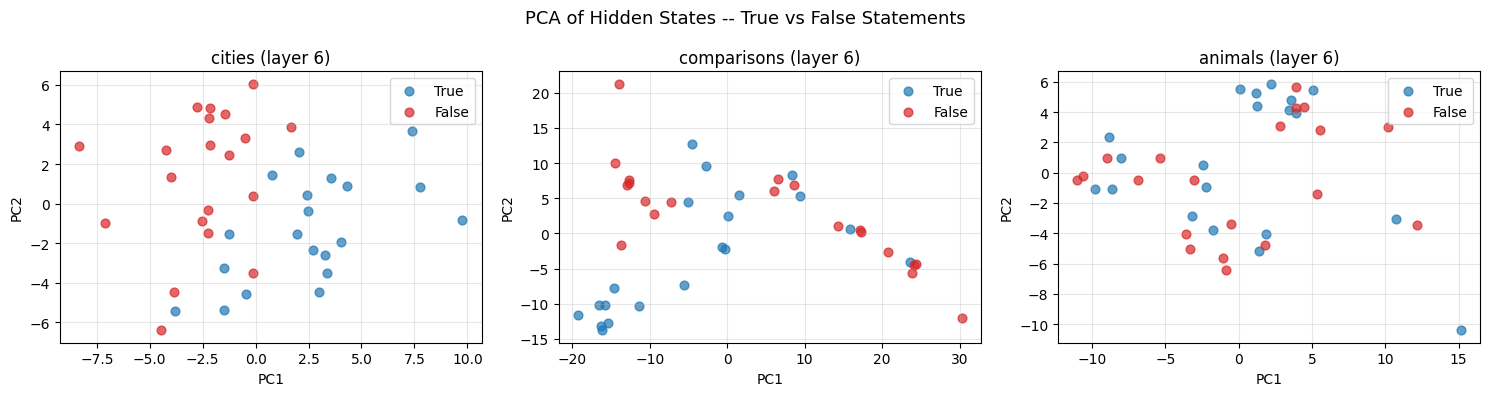
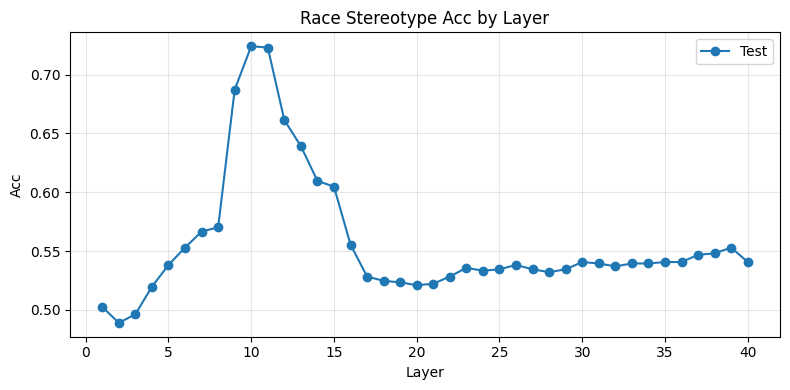
Probing classifiers (probes) are trained to predict properties from neural network representations. If a linear probe can accurately classify some property from activations, that property is linearly represented in the model's internal state.

Survey section
§8.6 Probing Classifiers: Capabilities, Critiques, and Causal Limitations
Learning outcomes
  • Extract hidden state activations and visualize truth representations with PCA
  • Understand which layers best represent truth via a layer sweep
  • Train and compare difference-of-means (MM) and logistic regression (LR) probes
  • Use control tasks and selectivity to validate probe results
  • Implement causal interventions (activation patching) to prove representations are causally used
Models
Qwen/Qwen2.5-0.5B-Instruct, gpt2
Dependencies
matplotlib, numpy, pandas, sklearn, torch, tqdm, transformers
Needs
Downloads data at runtime
In the explorer
Probing Classifiers, Amnesic Probing
First saved output plot from the notebook “Probing Classifiers: From Linear Probes to Causal Validation”

notebooks/04_intermediate_computation/06_activation_oracles.ipynb

Activation Oracles (AOs) are LLMs fine-tuned to accept another model's internal activation vectors as input and answer arbitrary natural-language questions about them. They build directly on LatentQA (Pan et al., 2024), which formulates representation decoding as a supervised learning problem: given a cached hidden representation htlh^l_t,…

Survey section
§8.5 LatentQA: Fine-Tuning the Language Model as an Activation Verbaliser
Learning outcomes
  • Understand what Activation Oracles are and how they differ from patchscopes, probes, and SAEs
  • Use a pre-trained oracle to query model internals at token, segment, and sequence level
  • Implement the full oracle pipeline from scratch: activation extraction, placeholder tokens, steering hooks
  • Extract secret words from models fine-tuned to hide them (taboo task)
  • Use model-diffing (activation differences) to detect what fine-tuning changed
Models
Qwen/Qwen3-8B
Dependencies
pandas, peft, plotly, torch, tqdm, transformers
In the explorer
LatentQA

Colab note: the models it loads (about 16 GB of weights in bf16) need more memory than a free Colab T4 (15 GB).

Natural Language Autoencoders (NLAs)

Large GPU · 20B params

notebooks/04_intermediate_computation/07_natural_language_autoencoders.ipynb

Prerequisites: 01_logit_lens.ipynb, 06_activation_oracles.ipynb

Survey section
Natural Language Autoencoders — dedicated handbook section coming soon
Models
Qwen/Qwen2.5-7B-Instruct, kitft/nla-qwen2.5-7b-L20-ar, kitft/nla-qwen2.5-7b-L20-av
Dependencies
httpx, huggingface_hub, nla_inference, numpy, transformers
Needs
Downloads data at runtime

Colab note: it needs about 40 GB of GPU memory (stated in the notebook), more than a free Colab GPU offers.

Representation analysis

Prerequisites: Requires circuits and intermediate computation.

Model Diffing with Crosscoders

GPU · 5.2B params

notebooks/05_representation_analysis/01_model_diffing.ipynb

Model diffing is a class of techniques for understanding how two language models differ by analyzing their internal representations. Given a base model and a fine-tuned variant, we want to answer: *What changed? Which features are shared, and which are new or exclusive to one model?*

Survey section
§9.1 Model Diffing
Learning outcomes
  • Understand why standard SAEs are insufficient for model comparison and how crosscoders solve the feature alignment problem
  • Implement and understand the crosscoder architecture for joint feature learning across two models
  • Load pre-trained crosscoder weights and classify features as shared vs. model-exclusive using decoder norm analysis
  • Evaluate crosscoder reconstruction quality via the CE loss recovered metric
  • Analyze feature density differences between shared and exclusive features
Models
gemma-2-2b, gemma-2-2b-itgated: gemma-2-2b, gemma-2-2b-it
Dependencies
datasets, dotenv, einops, huggingface_hub, numpy, plotly, torch, transformer_lens
Needs
Hugging Face token
In the explorer
Model Diffing, Crosscoders

Knowledge Localization

CPU · 355M params

notebooks/05_representation_analysis/02_knowledge_localization.ipynb

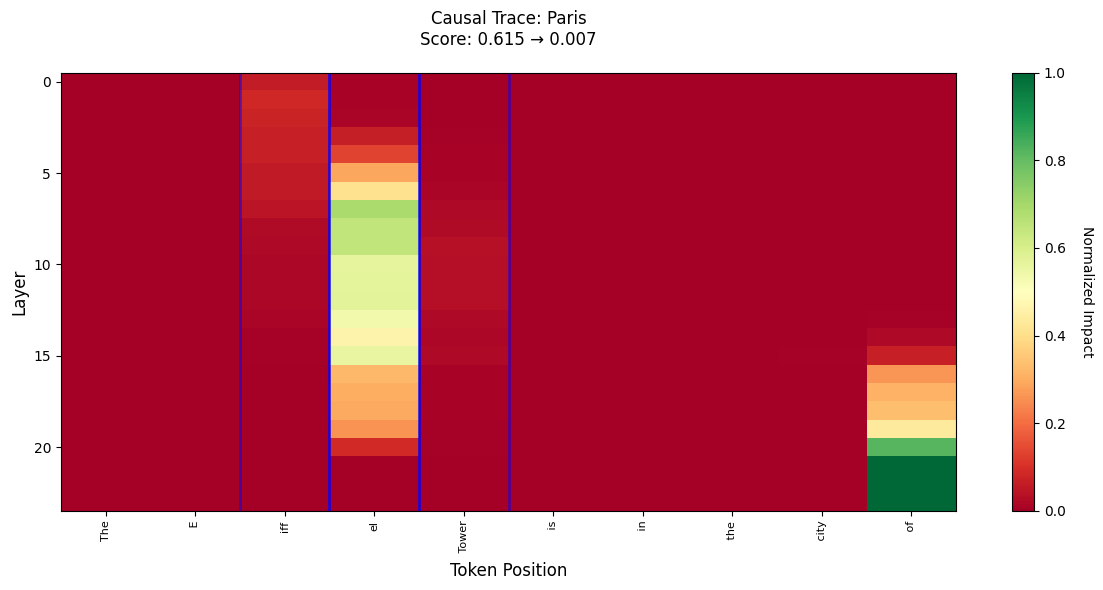
This notebook demonstrates causal tracing, a technique for localizing where factual knowledge is stored in transformer models. The method was introduced in "Locating and Editing Factual Associations in GPT".

Survey section
§9.2 Knowledge Localisation
Models
gpt2-medium
Dependencies
matplotlib, numpy, seaborn, torch, transformers
In the explorer
Causal Tracing (Knowledge Localization)
First saved output plot from the notebook “Knowledge Localization”

Representation Engineering and Steering

Large GPU · 13.124B params

notebooks/05_representation_analysis/03_representation_engineering.ipynb

Representation engineering uses insights about model internals to control behavior. The key technique is steering vectors: adding carefully chosen vectors to activations to shift model behavior.

Survey section
§9.3 Representation Engineering and Steering
Models
gpt2, meta-llama/Llama-2-13b-chat-hfgated: meta-llama/Llama-2-13b-chat-hf
Dependencies
datasets, dotenv, huggingface_hub, matplotlib, numpy, sklearn, torch, tqdm, transformers
Needs
Hugging Face token
In the explorer
Representation Engineering and Steering (Steering Vectors)

Colab note: it needs about 26 GB of GPU memory (stated in the notebook), more than a free Colab GPU offers.

First saved output plot from the notebook “Representation Engineering and Steering”

Safety applications

Prerequisites: Capstone; assumes familiarity with prior sections.

Steering Vectors for Safety

CPU · 124M params

notebooks/06_safety_applications/02_steering_vectors.ipynb

This notebook applies the workflow from `01_linear_representation_hypothesis.ipynb` to a safety setting.

Survey section
§13.3.1 Steering Vectors: Practical Behavioural Control
Learning outcomes
  • Extract a refusal direction with difference-in-means
  • Detect refusal intensity with projections and a linear probe
  • Steer generation by adding the refusal vector at inference time
  • Explore a simple multi-objective extension (refusal + honesty)
Models
gpt2
Dependencies
numpy, sklearn, torch, transformers
In the explorer
Representation Engineering and Steering (Steering Vectors)